


















Number of bags


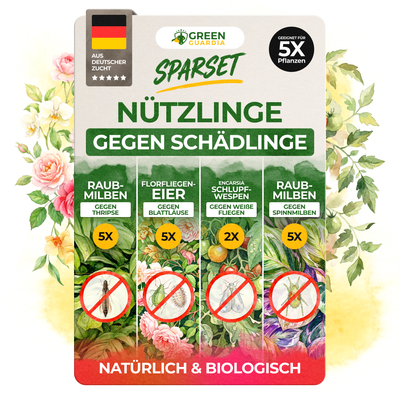
Lacewing larvae eggs against aphids and mealybugs
-
100% natural aid against aphids & co.
-
From German breeding – delivered fast
-
Completely chemical-free – no residues
-
Discreet, effective & biologically sustainable
-
Safe for children & pets
Number of bags
In stock - with you in 2-4 working days


Was unsere Kund*innen sagen
-
Wirksamkeit
nicht wirksam sehr wirksam -
Anwendung
kompliziert kinderleicht -
Verträglichkeit
bedenklich sehr sicher
Lieferoption wählen & clever sparen:


Choose options
-
100% natural aid against aphids & co.
-
From German breeding – delivered fast
-
Completely chemical-free – no residues
-
Discreet, effective & biologically sustainable
-
Safe for children & pets
Number of bags
In stock - with you in 2-4 working days
Lieferoption wählen & clever sparen:
-
100% natural aid against aphids & co.
-
From German breeding – delivered fast
-
Completely chemical-free – no residues
-
Discreet, effective & biologically sustainable
-
Safe for children & pets
Number of bags
In stock - with you in 2-4 working days
Lieferoption wählen & clever sparen:
GREEN GUARDIA Lacewing Larvae Eggs – Biological Pest Control for Hanging
The GREEN GUARDIA lacewing larvae eggs in bags are an effective, natural solution for controlling sucking pests such as Aphids, thrips, spider mites and Scale insectsThe tiny larvae hatch directly on the plant, specifically hunt down pests and reduce infestation – completely without chemicals or residues.
The application is particularly easy: Hang up the little bagsCreate suitable conditions – and the "aphid lions" will do the work. Ideal for Houseplants, balconies, greenhouses and professional cultures.
Application tips
- Temperature: Minimum 15 °C, optimal 20–26 °C for successful development.
- No chemicals: Avoid using chemical agents for at least 6 weeks before and during application.
- Remove ants: Ants protect aphids and should be eliminated beforehand.
- Placement: Hang the sachets directly on infested plants or near the source of the pest.
Areas of application for lacewing larvae
- Indoor and ornamental plants: Biological protection for indoor use – without residue.
- Cannabis cultures: Safe for sensitive plants – without affecting the harvest.
- Garden & Greenhouse: Sustainable control of aphids & co.
- Agriculture & Cultivation: An environmentally friendly alternative to chemical agents.
🌿 Conclusion: GREEN GUARDIA Lacewing Larva Eggs for hanging are a natural, effective solution against numerous plant pests – easy to use, powerful in effect and particularly environmentally friendly.
Florfliegenlarven gegen Blattläuse & Co. – die clevere Nützlingslösung in Tüten
Blattläuse, Thripse, Spinnmilben und weitere Schädlinge können Pflanzen erheblich schwächen – ob im Haus, Garten, Gewächshaus oder auf dem Balkon. Die GREEN GUARDIA Florfliegenlarven in Aufhängetüten sind eine effektive, natürliche und vollständig chemiefreie Lösung zur gezielten Schädlingsbekämpfung.
Was macht Florfliegen so effektiv?
Florfliegenlarven gelten als extrem gefräßig – nicht umsonst werden sie auch „Blattlauslöwen“ genannt. Kurz nach dem Schlüpfen beginnen sie aktiv mit der Jagd auf saugende Schädlinge und fressen diese zuverlässig. Die erwachsenen Tiere sorgen anschließend für die nächste Generation.
Florfliegeneier in Tüten – so funktioniert’s
Jede Tüte enthält über 100 Florfliegeneier in unterschiedlichen Entwicklungsstadien. Innerhalb von etwa 2 Wochen schlüpfen die Larven, bekämpfen die Schädlinge aktiv und verschwinden nach getaner Arbeit rückstandsfrei.
- Flächenleistung: Eine Tüte reicht für bis zu 10 m².
- Einsatz: Geeignet für Zimmerpflanzen, Hochbeete, Gewächshaus & Garten.
- Wirkung: Biologisch, effektiv & vollkommen ungiftig.
So wendest du die Tüten richtig an
- Vorbereitung: Öffne die Tüte an der seitlichen Perforation erst direkt am Einsatzort.
- Variante 1: Hänge die geöffnete Tüte direkt in die befallene Pflanze.
- Variante 2: Pflanze leicht befeuchten und die Eier vorsichtig auf betroffene Stellen streuen.
- Wartezeit: Tüte oder Eier mindestens 10 Tage in der Pflanze belassen, damit alle Larven schlüpfen können.
🌱 Tipp: Setze Florfliegenlarven frühzeitig ein – bereits bei den ersten Anzeichen eines Befalls. Eine Wiederholung im Abstand von 2–3 Wochen erhöht die Erfolgsrate deutlich.
Blattläuse, Wollläuse, Thripse & Spinnmilben natürlich bekämpfen – mit GREEN GUARDIA Florfliegenlarven
Blattläuse, Wollläuse, Thripse und Spinnmilben zählen zu den häufigsten und lästigsten Pflanzenschädlingen im Garten, Gewächshaus oder an Zimmerpflanzen. Sie saugen Pflanzensäfte, schwächen das Wachstum und übertragen häufig Krankheiten.
Mit GREEN GUARDIA Florfliegen bekämpfst du diese Schädlinge gezielt und effektiv – 100 % natürlich, rückstandsfrei und ohne Chemie.
Was macht diese Schädlinge so gefährlich?
- Blattläuse: Vermehren sich rasant und übertragen Pflanzenviren.
- Wollläuse: Verstecken sich in Blattansätzen und hinterlassen klebrigen Honigtau.
- Thripse: Saugen an Blättern und Knospen – oft sichtbar durch silbrige Flecken.
- Spinnmilben: Bilden feine Gespinste und verursachen Blattverfärbungen und Blattabwurf.
So beugst du einem Befall vor
- Regelmäßig kontrollieren: Blätter, Blattunterseiten und Triebe frühzeitig prüfen.
- Pflanzen stärken: Gesunde Pflanzen sind weniger anfällig – achte auf Nährstoffe und Bodenqualität.
- Luftzirkulation verbessern: Besonders wichtig in Innenräumen und Gewächshäusern.
- Biologische Nützlinge einsetzen: Florfliegenlarven und Raubmilben ergänzen sich ideal.
🌱 Tipp: Die beste Wirkung erzielst du bei Temperaturen ab 12 °C. Bei starkem Befall empfiehlt sich die Kombination mit Florfliegenlarven oder Raubmilben für maximale Ergebnisse.

GREEN GUARDIA vs. Other providers
What sets us apart from the others

|

|

Produkte für Haus, Garten & tiernahe Bereiche |

Unklare Produktinfos |

Nützlinge aus deutscher Zucht |
Unklare Herkunftsangaben |

Praxisnah entwickelt |
Komplizierte Auswahl |

Klare Anwendungshinweise |
Wenig Anwendungshinweise |

Frisch abgefüllt bzw. sorgfältig verpackt |
Längere Lager- oder Lieferzeiten möglich |

German breeding
Beneficial insects from controlled German breeding – quality you can rely on

Expert advice
Application tips and support from our experts – targeted and effective.

Fast help
Our beneficial insects are ready for immediate use and help specifically with acute infestations in the house or garden.

Natural & safe
Harmless in everyday life – use is absolutely risk-free for children, pets & plants.


We let our customers speak.

Natural pest control
At GREEN GUARDIA you will find the right natural solution for every pest problem – completely without chemicals.
Whether parasitic wasps against moths, predatory mites against spider mites, or nematodes against fungus gnats and slugs – our beneficial insects provide reliable help in the house, garden, or greenhouse.
As a specialist for biological pest control, we stand for quality, innovation, and sustainable effectiveness – in harmony with nature, people, and animals.

Expert advice – Personal & practical
Our expert advisors support you with targeted application tips and many years of experience in natural pest control. Whether you have questions about application, combining different beneficial insects, or selecting the right product – we will help you quickly and competently.
FAQ Lacewings
Do you have questions about our products, their application, or shipping? Here you will find the most important answers at a glance. If anything remains unclear, feel free to contact us!

Lacewing larvae are natural beneficial insects that specifically combat pests such as aphids, mealybugs, thrips, and spider mites. The cardboard honeycomb contains approx. 500 larvae, which are tapped directly over the plants.
Lacewing larvae are very effective against aphids, mealybugs, thrips, spider mites, and occasionally whiteflies.
The larvae hatch from the cardboard honeycomb, actively search for sap-sucking pests, and eat them. After about two weeks, they pupate and end their active feeding cycle.
A cardboard honeycomb contains approx. 500 larvae in different developmental stages.
The larvae are active for about 2–3 weeks. During this time, they feed intensively on pests. Afterward, they pupate.
Yes, they are suitable for balconies, terraces, greenhouses, raised beds, and protected garden areas. However, direct sun and heavy rain should be avoided.
The larvae arrive securely packed in a cardboard honeycomb that can be applied directly. Shipping is temperature-dependent.
Usually 1–3 working days. In extreme temperatures, shipping may be delayed to ensure the quality of the beneficial insects.
Yes, the honeycomb should be applied as soon as possible after receipt. Until then, please store it in a cool (8–12 °C) and dark place – but do not freeze!
They are delivered with larvae in different developmental stages, ensuring a long-lasting effect.
The larvae are often difficult to see. You may be able to observe small movements or them slowly crawling out. If the honeycomb looks dry or empty, contact support.
Please take photos immediately and contact customer service – replacements are usually sent quickly and obligingly.
Carefully tap the honeycomb directly over the infested plants or place it on them. Do not hang it in the tips – leaf axils or the rim of the pot are ideal.
For an infestation: 1 honeycomb for approx. 10 m².
Preventive: 1 honeycomb for approx. 20 m².
At the first signs of pests. Temperatures between 12 °C and 30 °C are optimal.
The effect begins after just a few days. A visible reduction in pests usually occurs within 7–14 days.
No, it can simply be shaken over the plants or laid flat on the soil. The larvae migrate out on their own.
Yes. In case of a severe infestation, a follow-up application after 2–3 weeks is recommended.
No, they are completely harmless to humans, pets, and plants. They are natural beneficial insects.
Yes, they can be easily combined with, for example, parasitic wasps or predatory mites – depending on the pest.
After the feeding phase, the larvae pupate. There are no residues, and no permanent population remains.
An application can be useful even without visible pests, as larvae are often hidden or active in early stages.
Yes, they are also perfectly suitable for sensitive crops like herbs or cannabis.
Check the temperature, humidity, ant infestation, and possible residues of pesticides. A repetition or combination with other beneficial insects may be useful.


