


















Number of cardboard honeycombs


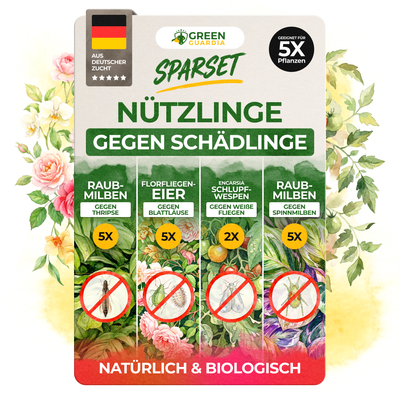
Lacewing larvae against aphids and mealybugs
-
100% natural help against aphids & more
-
Bred in Germany – fast delivery
-
Completely chemical-free – no residues
-
Discreet, effective & biologically sustainable
-
Safe for children & pets
Number of cardboard honeycombs
In stock - delivered to you in 2-4 business days


Was unsere Kund*innen sagen
-
Wirksamkeit
nicht wirksam sehr wirksam -
Anwendung
kompliziert kinderleicht -
Verträglichkeit
bedenklich sehr sicher
Lieferoption wählen & clever sparen:


Choose options
-
100% natural help against aphids & more
-
Bred in Germany – fast delivery
-
Completely chemical-free – no residues
-
Discreet, effective & biologically sustainable
-
Safe for children & pets
Number of cardboard honeycombs
In stock - delivered to you in 2-4 business days
Lieferoption wählen & clever sparen:
-
100% natural help against aphids & more
-
Bred in Germany – fast delivery
-
Completely chemical-free – no residues
-
Discreet, effective & biologically sustainable
-
Safe for children & pets
Number of cardboard honeycombs
In stock - delivered to you in 2-4 business days
Lieferoption wählen & clever sparen:
Lacewing larvae against aphids & mealybugs – natural help from the cardboard honeycomb
Lacewing larvae are the larvae of the lacewing, which track down and feed on aphids, mealybugs, thrips, and spider mites on plants. They are a biological alternative to chemical sprays and are harmless to children, pets, and plants.
Lacewings against aphids: why picking them off by hand is too late
No one notices a single aphid. The problem is their speed: aphids give birth to live young, and each one is capable of reproducing itself after just a few days. Therefore, what you see is already the second or third generation. On top of that, there is the sticky honeydew on leaves and windowsills, which later attracts dark fungal growth. Mealybugs make it even harder for you: they hide under a waxy layer in leaf axils and at root collars, where sprays hardly reach.
Where the larvae help you best
The larvae can be used wherever the plant is located. On the windowsill for houseplants and ornamental plants, in the greenhouse and raised bed, on balconies and terraces in pots and planters, in the garden bed, and in larger crops. They can also be used on sensitive plants like cannabis because they leave nothing behind on the leaf. Two conditions apply everywhere: the larvae become active from 12 °C, and they really get going between 18 and 30 °C. Attention: Where ants guard aphids and harvest the honeydew, they will defend their herd against beneficial insects. So, the ant trail should be removed beforehand.
Lacewings against mealybugs: what happens in the cardboard honeycomb
The compartments of the cardboard honeycomb keep around 150 larvae separated so they don't eat each other on the way to you. Because they contain different stages of development, small and large larvae are together in one honeycomb: replenishment comes over several days. On the plant, the larva grabs its prey with sickle-shaped jaws and sucks it dry. Aphids, mealybugs, thrips, spider mites – whatever crawls within reach gets eaten. Using lacewings against mealybugs works precisely because the larvae actively hunt for the pests instead of relying on contact with a chemical agent. Once the prey is gone, the larvae pupate and disappear on their own.
Buying lacewing larvae: Which quantity fits your infestation?
In the case of an acute infestation, one cardboard honeycomb is sufficient for up to 10 m², and for preventative use, up to 20 m². If you want to buy lacewing larvae, it is also worth taking a look at the form: we also offer lacewings as eggs on cards or in bags, and as brown lacewings in tubes. One of the differences is speed. Eggs have to hatch first; in the cardboard honeycomb, there are already larvae ready to feed. For an infestation you can already see today, the honeycomb is the right choice. Live goods are delivered with application instructions; it is best to release the larvae immediately upon receipt.
When are lacewing larvae the right choice?
Lacewing larvae are the right choice when children, pets, or edible plants are nearby and you don't want any residues left on the leaf. They work best from 12 °C, with an optimal range between 18 and 30 °C.
When are lacewing larvae not the right remedy?
Below 12 °C, the larvae remain sluggish, so their use is not worthwhile in cool winter quarters. If you have used chemical pesticides in the last six weeks, you should wait: the residues will affect the beneficial insects just as much as the pests. As long as ants are guarding the aphids, the larvae won't get far, so the ants must be removed first. And one honeycomb will not clear everything in a single pass. For heavy infestations, a second application after two to three weeks is part of the process.
🌿 Conclusion: With GREEN GUARDIA lacewing larvae in the cardboard honeycomb, you can tackle aphids and mealybugs biologically. Ready to eat immediately, residue-free, and chemical-free.
Hungry for aphids and more – buy lacewing larvae now!
Florfliegenlarven in Pappwaben – natürlich gegen Blattläuse, Wollläuse & Co.
Wie viele Pappwaben brauche ich?
Eine Pappwabe reicht bei akutem Befall für bis zu 10 m², vorbeugend für bis zu 20 m².
Anwendung & Tipps: So nutzt du Florfliegenlarven richtig
- Direkt ausbringen: Die Wabe vorsichtig über den befallenen Pflanzen ausschütteln, möglichst nah an den betroffenen Stellen. Vorbereitung oder Wartezeit braucht es nicht.
- Temperatur beachten: Die Larven benötigen mindestens 12 °C, optimal sind 18 bis 30 °C für eine aktive Entwicklung.
- Ameisen zuerst entfernen: Ameisen schützen Blattläuse und sollten vor der Anwendung beseitigt werden.
- Keine Chemikalien: Ein paar Wochen vor und während der Anwendung auf chemische Pflanzenschutzmittel verzichten.
- Wirkdauer: Die Larven beginnen sofort nach dem Ausschütteln mit der Schädlingsjagd, sichtbare Effekte folgen oft innerhalb weniger Tage.
- Wiederholung bei starkem Befall: Nach zwei bis drei Wochen erneut anwenden. So wird auch der Nachwuchs der Schädlinge zuverlässig erfasst.
- Lieferung: Lebendware. Am besten direkt nach Erhalt ausbringen und die Wabe bis dahin kühl und dunkel halten, nicht in die direkte Sonne stellen.
Geeignete Einsatzbereiche
- Zimmer- & Zierpflanzen: Biologische Schädlingsbekämpfung für Innenräume, auch bei Wollläusen in schwer erreichbaren Blattachseln.
- Garten & Gewächshaus: Wirksam gegen Blattläuse, Wollläuse, Thripse und Spinnmilben in Gemüse- und Zierpflanzenkulturen.
- Balkon & Terrasse: Geeignet für Topfpflanzen, Kübelkulturen und Hochbeete.
- Cannabis-Pflanzen: Schonend zur Pflanze, stark gegen Schädlinge, ohne Rückstände auf dem Blatt.
- Landwirtschaftlicher Einsatz: Umweltfreundliche Alternative für größere Flächen.
- Vorbeugend an anfälligen Pflanzen: Eine Pappwabe deckt vorbeugend bis zu 20 m² ab.
🌱 Gut zu wissen: Die Anwendung mit GREEN GUARDIA Florfliegenlarven ist chemiefrei und rückstandsfrei – auch an Gemüse-, Zier- und empfindlichen Pflanzen.
Blattläuse, Wollläuse, Thripse & Spinnmilben natürlich bekämpfen – mit GREEN GUARDIA Florfliegenlarven
Blattläuse, Wollläuse, Thripse und Spinnmilben zählen zu den häufigsten und lästigsten Pflanzenschädlingen im Garten, Gewächshaus oder an Zimmerpflanzen. Sie saugen Pflanzensäfte, schwächen das Wachstum und übertragen häufig Krankheiten.
Mit GREEN GUARDIA Florfliegen bekämpfst du diese Schädlinge gezielt und effektiv – 100 % natürlich, rückstandsfrei und ohne Chemie.
Was macht diese Schädlinge so gefährlich?
- Blattläuse: Vermehren sich rasant und übertragen Pflanzenviren.
- Wollläuse: Verstecken sich in Blattansätzen und hinterlassen klebrigen Honigtau.
- Thripse: Saugen an Blättern und Knospen – oft sichtbar durch silbrige Flecken.
- Spinnmilben: Bilden feine Gespinste und verursachen Blattverfärbungen und Blattabwurf.
So beugst du einem Befall vor
- Regelmäßig kontrollieren: Blätter, Blattunterseiten und Triebe frühzeitig prüfen.
- Pflanzen stärken: Gesunde Pflanzen sind weniger anfällig – achte auf Nährstoffe und Bodenqualität.
- Luftzirkulation verbessern: Besonders wichtig in Innenräumen und Gewächshäusern.
- Biologische Nützlinge einsetzen: Florfliegenlarven und Raubmilben ergänzen sich ideal.
🌱 Tipp: Die beste Wirkung erzielst du bei Temperaturen ab 12 °C. Bei starkem Befall empfiehlt sich die Kombination mit Florfliegenlarven oder Raubmilben für maximale Ergebnisse.

GREEN GUARDIA vs. other providers
What sets us apart from the rest

|

|

Produkte für Haus, Garten & tiernahe Bereiche |

Unklare Produktinfos |

Nützlinge aus deutscher Zucht |
Unklare Herkunftsangaben |

Praxisnah entwickelt |
Komplizierte Auswahl |

Klare Anwendungshinweise |
Wenig Anwendungshinweise |

Frisch abgefüllt bzw. sorgfältig verpackt |
Längere Lager- oder Lieferzeiten möglich |

German breeding
Beneficial insects from controlled German breeding – quality you can rely on

Expert advice
Application tips and support from our experts – targeted and effective.

Quick help
Our beneficial insects are ready for immediate use and provide targeted help for acute infestations in the house or garden.

Natural & safe
Safe for everyday life – use is absolutely risk-free for children, pets & plants.


Let our customers speak for us.

Natural pest control
At GREEN GUARDIA you will find the right natural solution for every pest problem – completely without chemicals.
Whether lacewings against aphids, predatory mites against spider mites, or nematodes against fungus gnats and slugs – our beneficial insects provide reliable help in the house, garden, or greenhouse.
As a specialist in biological pest control, we stand for quality, innovation, and sustainable impact – in harmony with nature, people, and animals.

Expert advice – Personal & practical
Our expert consultants support you with targeted application tips and many years of experience in natural pest control. Whether you have questions about application, combining different beneficial insects, or selecting the right product – we are here to help quickly and competently.
FAQ Lacewings
Do you have questions about our products, their application, or shipping? Here you will find the most important answers at a glance. If anything remains unclear, please feel free to contact us!

Lacewing larvae, also known as "aphid lions," are natural predators of aphids, mealybugs, thrips, and other pests. They feed exclusively on these pests and reduce the infestation in a natural way.
Depending on the chosen variant, our products contain either lacewing eggs on cards, loose lacewing eggs in a bag, or already hatched lacewing larvae in a practical cardboard comb. All variants are designed for easy and targeted application of the beneficial insects.
Yes, lacewing larvae are completely harmless to humans, pets, and plants. They leave no residues and disappear after their work is done.
Lacewing larvae are suitable for the natural control of aphids, woolly aphids, mealybugs, thrips, and spider mites.
The hatched larvae are only 1–2 mm in size and often hide on the undersides of leaves. Their activity is usually only visible through the decline of the pests.
Depending on temperature and humidity, the larvae hatch within 1 to 5 days and remain active for about 2–4 weeks.
Depending on the chosen variant, you will receive lacewing eggs on cards, loose lacewing eggs in a bag, or lacewing larvae in a practical cardboard comb.
No – they contain eggs in various stages of development. The larvae will hatch in the following days.
Best at the first sign of pest infestation – this allows the beneficial insects to intervene early.
Ideally, use them immediately. Short-term storage for 1–2 days at 8–12°C is possible.
Shipping information:
- Fresh shipping: Orders placed Monday to Friday by 5:00 AM are shipped fresh daily.
- Weekend orders: Orders placed after Friday at 5 AM are shipped the following Monday to guarantee the freshest beneficial insects.
One card is sufficient for up to 2m² of plant area. In case of heavier infestation or larger areas, use multiple cards.
The lacewing eggs or larvae are applied directly near the affected plants. Cards can simply be hung up or placed between the plants. The bag can be opened along the perforation – after that, the eggs can be hung up directly or carefully sprinkled. Carefully shake out the lacewing larvae from the cardboard comb into the affected area. For best results, apply as early as possible and avoid using chemical agents.
At 15°C after approx. 5–7 days, at 20°C already after 2–3 days.
Leave them hanging for at least 2-3 weeks so that all larvae can hatch and become active.
In case of severe or recurring infestation, a second application after 2–3 weeks is recommended.
Yes – e.g., on balconies, patios, or in the garden. Direct sunlight and heavy rain should be avoided, however.
No – the cards are ready for use. Simply place them, and hatching occurs automatically. Please open the bags at the perforation.
The newly hatched larvae are barely visible to the naked eye. They start hunting for pests immediately after hatching and are only clearly recognizable later.
Already after 5–10 days, depending on temperature, plant type, and pest density.
Yes – ideal for interiors, conservatories, or greenhouses.
Yes – lacewings can be well combined with parasitic wasps or predatory mites.
The larvae eat the pests, pupate later, or disappear by themselves – completely without residues.
Yes – they are mostly made of biodegradable material and can be disposed of in organic waste.


