




















Number of tubes


Brown lacewings against aphids, thrips, spider mites, and more.
-
100% natural help against aphids & more.
-
Bred in Germany – fast delivery
-
Completely chemical-free – no residue
-
Discreet, effective & biologically sustainable
-
Safe for children & pets
Number of tubes
In stock - arrives in 2-4 business days


Was unsere Kund*innen sagen
-
Wirksamkeit
nicht wirksam sehr wirksam -
Anwendung
kompliziert kinderleicht -
Verträglichkeit
bedenklich sehr sicher
Lieferoption wählen & clever sparen:


Choose options
-
100% natural help against aphids & more.
-
Bred in Germany – fast delivery
-
Completely chemical-free – no residue
-
Discreet, effective & biologically sustainable
-
Safe for children & pets
Number of tubes
In stock - arrives in 2-4 business days
Lieferoption wählen & clever sparen:
-
100% natural help against aphids & more.
-
Bred in Germany – fast delivery
-
Completely chemical-free – no residue
-
Discreet, effective & biologically sustainable
-
Safe for children & pets
Number of tubes
In stock - arrives in 2-4 business days
Lieferoption wählen & clever sparen:
Brown lacewings against aphids – natural help in a tube
Brown lacewings (Micromus angulatus) are beneficial insects that track down and eat aphids, thrips, spider mites, and other soft-bodied pests on plants. They are a chemical-free alternative to sprays, remain active even at moderate temperatures, and are therefore particularly suitable for indoors, conservatories, and greenhouses.
First one sticky leaf, then two, then three, then all of them
Aphids are rarely noticed one by one. First the leaf gets sticky, then the windowsill underneath starts to shine, and a dense colony has long since settled on the tip of the shoot. Thrips, on the other hand, leave behind silvery speckles, while spider mites create fine webs in the leaf axils. All three have two things in common: they are soft-bodied and multiply faster than you can pick them off. There is also a detail that many overlook: ants harvest the honeydew from the aphids and, in return, defend their herd against beneficial insects. The ant trail must therefore be cleared before any application.
Where you can use brown lacewings against thrips and aphids
The brown lacewing is the indoor specialist among lacewings. It protects your houseplants in the living room, the conservatory, as well as potted and tub plants on the balcony, terrace, and in raised beds. It also works gently on sensitive crops because nothing is left on the leaf. Brown lacewings against thrips and aphids like temperatures between 15 and 28 °C, ideally in a quiet place without drafts and direct sunlight. What sets them apart from other lacewings is especially noticeable indoors: they stay closer to the infested plant, wander off less, and are smaller and less sensitive to light.
What brown lacewings do against aphids on the plant
Once released, Micromus angulatus independently goes in search of the culprits. Brown lacewings against aphids have one main thing: hunger. They find their prey themselves, and whatever is soft-bodied and within reach is eaten – aphids as well as thrips, spider mites, and other soft pests. One tube contains 10 insects and is sufficient for 1 to 2 square meters, depending on the severity of the infestation. A little patience is required: the lacewings need a short period to settle in before they start searching for food. There are no residues, not even on vegetables and herbs.
Brown lacewings or lacewing larvae: which fits your infestation?
You can find several lacewing products in our shop. They differ in terms of quantity, area, and temperature. One tube of brown lacewings contains 10 insects for 1 to 2 square meters, with options up to ten tubes for 10 to 20 square meters. The larvae in the cardboard honeycomb, on the other hand, are the solution for larger areas: around 150 of them, one honeycomb for up to 10 square meters in case of an acute infestation. If you are looking for lacewing larvae because a whole row of beds or a full greenhouse needs to be treated, this is the better choice. And it's worth taking a close look at the temperature: the optimal range for the brown lacewing starts at 12 °C, while that of the larvae in the honeycomb starts at 18 °C.
When brown lacewings are not the right remedy
For large areas, they are simply the wrong choice. One tube covers 1 to 2 square meters; for a full greenhouse, you would need a corresponding amount – in that case, the cardboard honeycomb with its approximately 150 larvae is the more sensible option. Activity decreases below 15 °C, so using them in unheated rooms is not worth it. Anyone who has used chemical pesticides in the last six weeks should wait, otherwise the beneficial insects will not survive. A drafty location or direct sunlight is also not for them. As long as ants are guarding the aphids, the lacewings won't get very far.
🌿 Conclusion: With GREEN GUARDIA brown lacewings, you can tackle aphids, thrips, and spider mites biologically – targeted on individual plants, chemical-free, and even in cooler indoor spaces.
Small, quiet, and hungry: Get your brown lacewings now!
Anwendung der GREEN GUARDIA Braunen Florfliegen
Wie viele Röhrchen brauche ich?
Ein Röhrchen mit 10 Florfliegen reicht je nach Befallsstärke für rund 1 bis 2 m². Für richtig große Flächen empfehlen wir die Larven in der Pappwabe. Da drin tummeln sich rund 150 Stück, eine Wabe für bis zu 10 Quadratmeter bei akutem Befall.
Anwendung & Tipps: So nutzt du die Braunen Florfliegen richtig
- Direkt ausbringen: Das Röhrchen nach Erhalt vorsichtig an den betroffenen Pflanzen öffnen und die Florfliegen direkt auf die Pflanze setzen oder in unmittelbarer Nähe platzieren.
- Ruhigen Standort wählen: Für optimale Ergebnisse die Pflanzen möglichst zugfrei und nicht in direkter praller Sonne platzieren.
- Wirken lassen: Die Florfliegen benötigen etwas Zeit zur Eingewöhnung und beginnen anschließend mit der Nahrungssuche an den Pflanzen.
- Temperatur beachten: Ideal sind Temperaturen zwischen 15 und 28 °C für eine aktive Entwicklung und Nahrungssuche.
- Keine chemischen Mittel verwenden: Ein paar Wochen vor und während der Anwendung auf chemische Pflanzenschutzmittel verzichten.
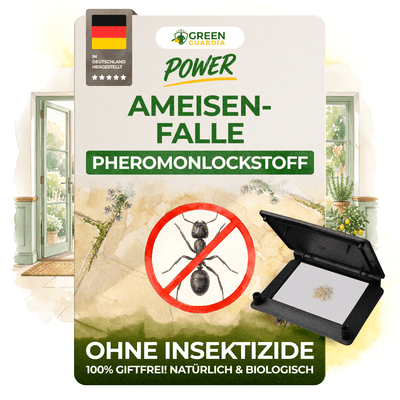
- Ameisen entfernen: Ameisen können Blattläuse schützen und die natürliche Schädlingsregulation beeinträchtigen.
- Wiederholung: Bei stärkerem oder wiederkehrendem Befall nach 2 bis 3 Wochen erneut anwenden, um auch nachschlüpfende Schädlinge zuverlässig zu erfassen.
Geeignete Einsatzbereiche
- Zimmerpflanzen: Natürliche Unterstützung bei Schädlingsbefall in Innenräumen.
- Gewächshaus & Wintergarten: Für Gemüse-, Kräuter- und Zierpflanzen geeignet.
- Balkon & Terrasse: Ideal für Topf- und Kübelpflanzen.
- Garten: Auch für kleinere Außenbereiche und Hochbeete geeignet.
- Empfindliche Kulturen: Schonende Alternative ohne chemische Rückstände.
🌱 Gut zu wissen: Die Anwendung mit GREEN GUARDIA Braunen Florfliegen ist chemiefrei und rückstandsfrei – auch an empfindlichen Pflanzen.
Blattläuse, Wollläuse, Thripse & Spinnmilben natürlich bekämpfen – mit GREEN GUARDIA Florfliegenlarven
Blattläuse, Wollläuse, Thripse und Spinnmilben zählen zu den häufigsten und lästigsten Pflanzenschädlingen im Garten, Gewächshaus oder an Zimmerpflanzen. Sie saugen Pflanzensäfte, schwächen das Wachstum und übertragen häufig Krankheiten.
Mit GREEN GUARDIA Florfliegen bekämpfst du diese Schädlinge gezielt und effektiv – 100 % natürlich, rückstandsfrei und ohne Chemie.
Was macht diese Schädlinge so gefährlich?
- Blattläuse: Vermehren sich rasant und übertragen Pflanzenviren.
- Wollläuse: Verstecken sich in Blattansätzen und hinterlassen klebrigen Honigtau.
- Thripse: Saugen an Blättern und Knospen – oft sichtbar durch silbrige Flecken.
- Spinnmilben: Bilden feine Gespinste und verursachen Blattverfärbungen und Blattabwurf.
So beugst du einem Befall vor
- Regelmäßig kontrollieren: Blätter, Blattunterseiten und Triebe frühzeitig prüfen.
- Pflanzen stärken: Gesunde Pflanzen sind weniger anfällig – achte auf Nährstoffe und Bodenqualität.
- Luftzirkulation verbessern: Besonders wichtig in Innenräumen und Gewächshäusern.
- Biologische Nützlinge einsetzen: Florfliegenlarven und Raubmilben ergänzen sich ideal.
🌱 Tipp: Die beste Wirkung erzielst du bei Temperaturen ab 12 °C. Bei starkem Befall empfiehlt sich die Kombination mit Florfliegenlarven oder Raubmilben für maximale Ergebnisse.

GREEN GUARDIA vs. other providers
What sets us apart from the rest

|

|

Produkte für Haus, Garten & tiernahe Bereiche |

Unklare Produktinfos |

Nützlinge aus deutscher Zucht |
Unklare Herkunftsangaben |

Praxisnah entwickelt |
Komplizierte Auswahl |

Klare Anwendungshinweise |
Wenig Anwendungshinweise |

Frisch abgefüllt bzw. sorgfältig verpackt |
Längere Lager- oder Lieferzeiten möglich |

German breeding
Beneficial insects from controlled German breeding – quality you can rely on

Expert advice
Application tips and support from our experts – targeted and effective.

Quick help
Our beneficial insects are ready to use immediately and provide targeted help for acute infestations in the house or garden.

Natural & safe
Harmless for everyday use – completely risk-free for children, pets & plants.


We let our customers do the talking.

Natural pest control
At GREEN GUARDIA you will find the right natural solution for every pest problem – without any chemicals.
Whether parasitic wasps against moths, predatory mites against spider mites, or nematodes against fungus gnats and slugs – our beneficial insects provide reliable help in the house, garden, or greenhouse.
As specialists in biological pest control, we stand for quality, innovation, and sustainable results – in harmony with nature, people, and animals.

Expert advice – Personal & practical
Our expert advisors will support you with targeted application tips and many years of experience in natural pest control. Whether you have questions about application, combining different beneficial insects, or selecting the right product – we are here to help you quickly and competently.
FAQ Brown lacewings
Do you have questions about our products, their application, or shipping? Here you can find the most important answers at a glance. If something remains unclear, please feel free to get in touch with us!

Brown lacewings (Micromus angulatus) are beneficial insects for natural support against aphid infestations and other soft-bodied plant pests.
Lacewings are particularly suitable for helping with infestations of aphids, thrips, and other soft-bodied plant pests.
The beneficial insects can be used on houseplants, balcony plants, herbs, vegetables, ornamental plants, and sensitive crops.
Brown lacewings are considered particularly robust, often stay closer to the plants, and are ideally suited for indoor spaces as well as cooler temperatures.
Yes, brown lacewings are particularly well-suited for homes, conservatories, and greenhouses.
Yes, these beneficial insects are a natural and chemical-free alternative and are considered safe for humans and pets when used as directed.
The lacewings are delivered safely and gently in a practical tube.
Each tube contains 10 brown lacewings (Micromus angulatus).
Depending on the severity of the infestation, one tube is suitable for approximately 1–2 m² of plant area.
The lacewings should be applied as soon as possible after receipt.
Shipping information:
- Fresh shipping: Orders placed Monday through Friday by 5:00 AM are shipped fresh daily.
- Weekend orders: Orders placed after 5:00 AM on Friday will be shipped the following Monday to guarantee the freshest beneficial insects.
After transport, lacewings often need some time to acclimatize and will quickly become active again at suitable temperatures.
After receipt, carefully place the lacewings directly onto the affected plants or in their immediate vicinity.
Application is particularly suitable when a pest infestation is visible and temperatures are mild between 15–28°C.
After a short acclimatization period, the lacewings will begin searching for food. Initial visible changes often appear within a few days.
No, chemical pesticides should be avoided as much as possible during application.
Ants often protect aphids and can therefore hinder natural pest regulation.
In the case of a more severe or recurring infestation, a further application after about 2–3 weeks is recommended.
Brown lacewings are considered relatively sedentary and often remain near the plants for longer.
Yes, the animals are visible, but they are rather small and inconspicuous.
Yes, application is possible without any problems in normal daylight.
Yes, these beneficial insects are particularly well-suited for sensitive plants, as no chemical residues are created.
The ideal time for application is at the first signs of a pest infestation.
Depending on the environment and food supply, the animals remain active in the plant area and support natural pest regulation there.


