


















Whiteflies: Check leaf undersides & control naturally
Whiteflies often settle on the underside of leaves and fly up like little white clouds when disturbed. The problem is not just the sap-sucking stages, but also the honeydew they excrete, which is sticky and promotes the growth of sooty mold. Here, you will learn how to reliably identify whiteflies and manage them sustainably with natural measures and beneficial insects.
What are whiteflies?
Whiteflies are not "true flies"; they belong to the scale insect family (Aleyrodidae). Adults sit on leaves and lay eggs. These hatch into larvae that attach themselves like small, flat "scales" to the underside of leaves and feed on plant sap. This weakens the plant and produces sticky honeydew.
How to identify an infestation
- Small white insects fly up when disturbed
- Larvae/"scales" on the underside of leaves (often in groups)
- Sticky honeydew on leaves or surfaces below
- Black residue (sooty mold) on honeydew
- Yellowing leaves, stunted growth, leaf drop in case of severe infestation
Which plants are frequently affected?
- Tomatoes, cucumbers, peppers (greenhouse)
- Brassicas in the garden (depending on the type)
- Ornamental plants (e.g., hibiscus, geraniums)
- Houseplants in warm, dry rooms
Why does an infestation occur?
- Warm climate, low air circulation (greenhouse, conservatory)
- Weakened plants (stress due to drought/lack of water)
- Dense growth, poor ventilation
- Introduction via new plants
What to do in case of infestation? (natural & effective)
1. Immediate measures
- Isolate plants (for houseplants)
- Thoroughly shower the undersides of leaves (mechanical removal)
- Remove heavily infested leaves (if possible)
- Use yellow sticky traps to reduce the number of adults and for monitoring
2. Improve conditions
- Space plants out to improve air circulation
- Reduce stress (water consistently, maintain stable location)
- Check regularly, especially the undersides
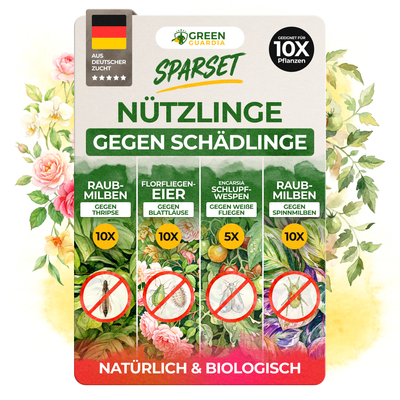
Beneficial insects against whiteflies: Encarsia parasitic wasps
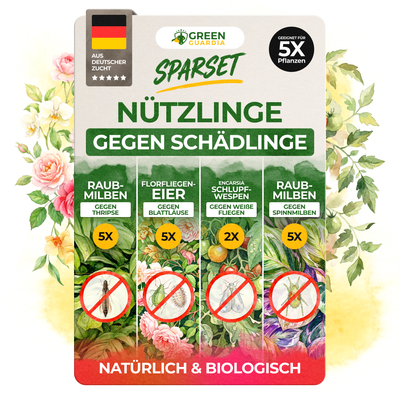
Recommendation: Encarsia (e.g., Encarsia formosa)
Encarsia parasitic wasps are a proven, natural solution against whiteflies. They parasitize the larval/pupal stages on the leaf undersides, preventing new adults from hatching. These tiny beneficial insects are harmless to humans and will disappear on their own when no more hosts are available.
- Why suitable: Whitefly larvae are stationary on the undersides of leaves – exactly where Encarsia work.
- Why effective: Targets the lifecycle directly and is suitable for everyday use without leaving residues.
- Practical tip: Introduce them early and plan for several checks/applications – the cycle is interrupted gradually.
Whitefly FAQ
Are yellow sticky traps enough on their own?
Yellow sticky traps catch adult insects and help with monitoring, but they rarely eliminate an infestation on their own because larvae and eggs remain on the leaf undersides. For sustainable results, beneficial insects are highly recommended.
Why do whiteflies keep reappearing?
Often, larvae remain on the undersides of leaves or new plants bring them in. Regular checks and early intervention are crucial.
What is the best prevention?
Briefly isolate and inspect new plants, do not crowd your plants, water consistently, and regularly check the undersides of leaves.
Do honeydew and sooty mold remain permanently?
Honeydew can be wiped off or showered away. Sooty mold will disappear once new honeydew deposits are prevented and the surface is cleaned.