



















Thrips: Recognizing & naturally reducing silvery damage
Thrips, also known as thunderflies, are tiny sucking pests that can damage leaves and flowers – especially in warm, dry indoor climates. Characteristic signs include silvery suction marks and small black droppings. Learn here how to identify thrips and which natural measures and four different beneficial insects against thrips can provide lasting help.
What are thrips?
Thrips are very small, slender insects that suck plant sap by piercing cells. This results in silvery, scarred-looking areas. Thrips are often found in flowers, on young shoots, or on the undersides of leaves. Some stages pupate in the substrate, which is why an infestation can often be stubborn.
How to recognize an infestation
- silvery, "scratched" leaf surfaces or light-colored suction streaks
- small black spots on the undersides of leaves
- misshapen or curled new shoots
- flower damage such as spots, deformation, or sticky/matted flowers
- tiny, moving insects, which are easier to see with a magnifying glass
Which plants are commonly affected?
- Houseplants such as Monstera, Ficus, Calathea, or Philodendron
- Flowering plants such as orchids, hibiscus, or ornamental plants
- Vegetables in greenhouses, such as bell peppers, cucumbers, or chilies
- Young plants and sensitive new growth
Why do infestations occur?
- dry, warm air, especially from heating or in a greenhouse
- stress from inconsistent watering or changing the plant's location
- dense plant groupings with little air circulation
- introduction via new plants
What to do in case of an infestation? Natural & effective
1. Immediate measures
- Isolate the plant to prevent the infestation from spreading
- Wash the leaves thoroughly, especially the undersides
- Remove heavily infested flowers or shoot tips
- Set up blue sticky traps for monitoring
2. Improving conditions
- Increase humidity, as thrips prefer a dry climate
- Water consistently and reduce plant stress
- Avoid placing plants too close together
Beneficial insects against thrips
Thrips are persistent because they hide in flowers, leaf folds, and sometimes in the substrate. That is why beneficial insects are often the most sustainable solution – especially in combination with washing, monitoring plants, and using blue sticky traps.
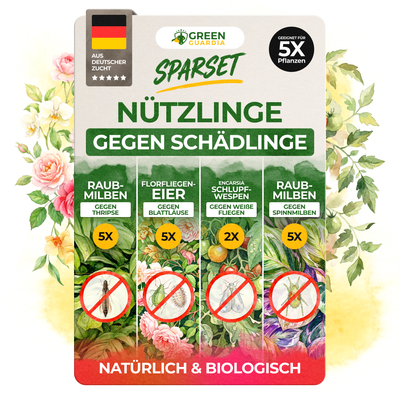
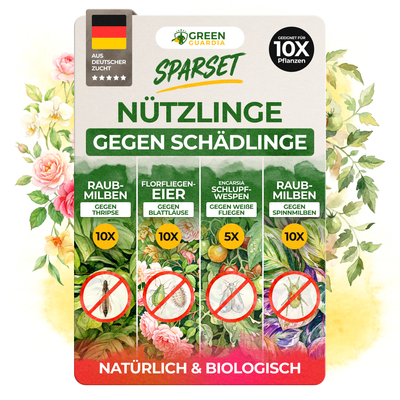
Green Guardia offers four different beneficial insects against thrips: Cucumeris predatory mites, Swirskii predatory mites, Orius predatory bugs, and nematodes. Each beneficial insect acts at a different point in the thrips' life cycle.
1. Cucumeris predatory mites – against young thrips larvae
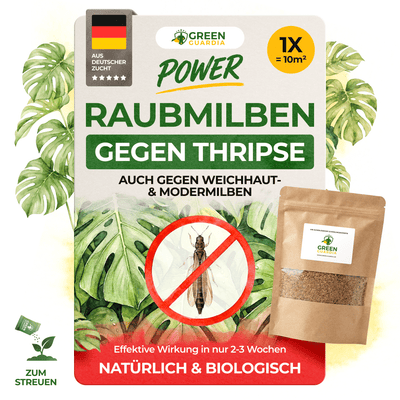
Cucumeris, also known as Neoseiulus cucumeris, is a proven beneficial insect against young thrips larvae on leaves. These predatory mites actively search leaf undersides, young shoots, and hidden areas.
- Effective against: young thrips larvae
- Ideal for: mild to moderate infestations
- Especially useful for: houseplants, ornamental plants, and preventative use
- Advantage: very good for the long-term reduction of new larval stages
2. Swirskii predatory mites – strong in warmth
Swirskii, also known as Amblyseius swirskii, is also a predatory mite that feeds on young thrips larvae. It is particularly active in warmer conditions and is therefore very well-suited for greenhouses, warm living rooms, or summer conditions.
- Effective against: young thrips larvae
- Ideal for: warm locations and higher reproductive pressure
- Especially useful for: greenhouses, conservatories, and warm indoor spaces
- Advantage: can also reduce other pests like whiteflies
3. Orius predatory bugs – against larvae and adult thrips
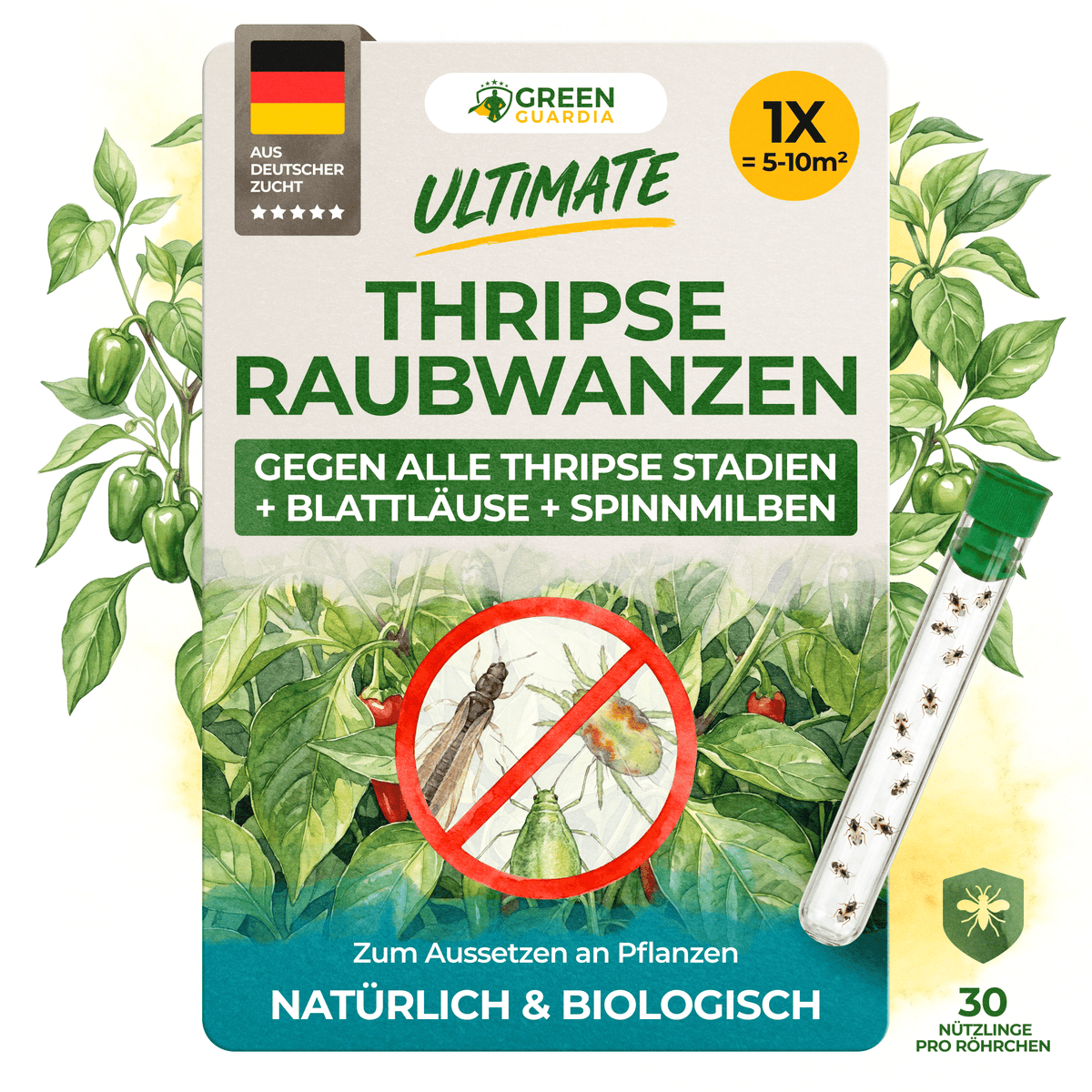
Orius predatory bugs are especially valuable for heavier thrips infestations because they not only eat larvae but also adult thrips. This makes them an ideal complement to predatory mites, which primarily combat the younger stages.
- Effective against: thrips larvae and adult thrips
- Ideal for: heavier or already visible infestations
- Especially useful for: greenhouses, conservatories, and larger plant collections
- Advantage: also combats mobile, adult thrips
4. Nematodes – against thrips in the substrate
Many thrips pupate in the soil or substrate. This is exactly where nematodes, such as Steinernema feltiae, come in. They are applied with the irrigation water and help reduce development stages in the substrate.
- Effective against: thrips stages in the soil or substrate
- Ideal for: recurring infestations
- Especially useful for: potted plants and houseplants
- Advantage: interrupts the thrips' life cycle in the substrate
The differences at a glance
| Beneficial Insect | Effective against | Best application |
|---|---|---|
| Cucumeris | Young thrips larvae | Prevention, mild to moderate infestation |
| Swirskii | Young thrips larvae | Warm locations, greenhouse, summer |
| Orius predatory bugs | Larvae and adult thrips | Heavier infestation, supplement to predatory mites |
| Nematodes | Thrips stages in substrate | Recurring infestation, potted plants |
FAQ about Thrips
Why do thrips keep coming back?
Often, eggs, larvae, or pupae remain in hidden places. Some stages are in the substrate. That is why a combination of leaf checks, predatory mites or Orius predatory bugs, and supplementary nematodes is particularly effective.
Are blue sticky traps alone enough?
No. Blue sticky traps are very helpful for monitoring and catching flying thrips, but they rarely resolve the infestation entirely. Combine them with washing the plant and appropriate beneficial insects.
Which beneficial insects are best for mild infestations?
For mild infestations or prevention, Cucumeris predatory mites are usually a very good choice. In warm locations, Swirskii can be particularly useful.
When should I use Orius predatory bugs?
Orius predatory bugs are particularly suitable for heavier infestations because, in addition to thrips larvae, they also eat adult thrips. They are a powerful supplement to predatory mites.
Why use nematodes against thrips?
Nematodes act in the substrate. Since many thrips pupate in the soil, nematodes can help break the cycle and reduce re-infestation.
Will the silvery damage remain visible?
Yes, old suction damage does not heal completely. The key is to ensure that new growth remains healthy and no new silvery areas are formed.