


















Mold mites: Identifying & naturally managing damp-loving mites
Mold mites are tiny, usually light-colored mites that appear wherever there is dampness and organic material is “active” – e.g., in potting soil, compost, damp pantry corners, or on mold. They are often not a classic plant pest, but can become a nuisance and are a sign of excessive moisture. With the right measures, the problem can be resolved quickly.
What are mold mites?
“Mold mites” is the common name for various species of mites that feed on fungi, mold spores, and organic material. They appear especially where it is permanently damp and mold or decay forms. You will often find them in potting soil, compost, damp corners of a basement, or in poorly stored dry goods (e.g., pet food, grain products).
How to identify mold mites
- tiny, light-colored dots (whitish/beige) that move
- often visible as a “swarming” surface on damp soil or in cracks
- appearing on damp windowsills, plant pots, saucers
- accompanying signs: musty smell, mold, soil that is too wet
Where do mold mites frequently occur?
- Potting soil (especially if kept permanently damp)
- Saucers/outer pots with standing water
- Compost, damp garden waste
- Basements, bathrooms, poorly ventilated corners
- Dry goods/pet food in damp or moldy conditions
Why do mold mites appear?
- excessive, permanent moisture (e.g., overwatering)
- waterlogging in the pot/saucer
- mold growth or decaying organic material
- warm indoor areas + lack of ventilation
Natural measures & suitable beneficial insects
1. Reduce moisture (the most important step)
- adjust watering amount, let soil dry out between waterings
- empty saucers, avoid waterlogging
- improve pot drainage (drainage holes, expanded clay)
2. Remove the source
- remove moldy soil/organic material
- in case of severe infestation: replace soil, clean the pot
- store dry goods in a dry place, dispose of infested goods
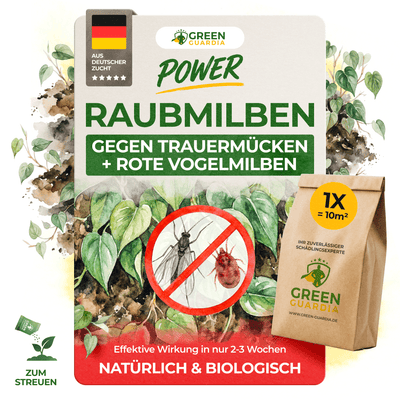
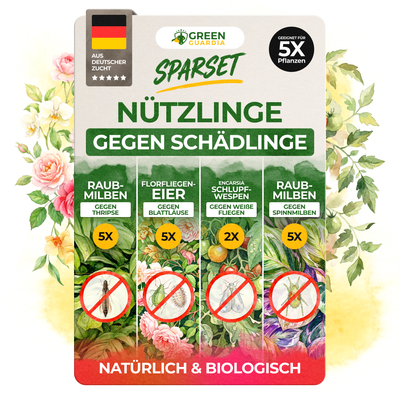
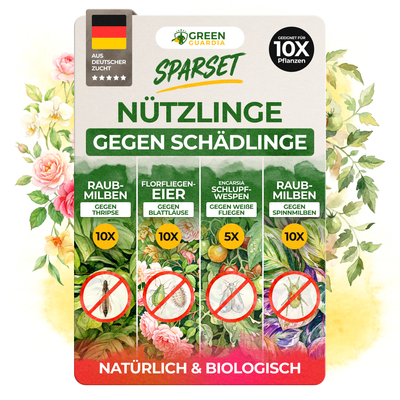
Beneficial insect recommendation: Predatory mites for support
If mold mites become a nuisance indoors or on plants, predatory mites can help as natural antagonists (depending on the situation). They help to regulate mite populations – especially where it is not possible to dry everything out “overnight”.
- Why they fit: Predatory mites are natural enemies of small mite species.
- Why it makes sense: They complement drying out/source management if an infestation is already “running”.
- Important: Without the moisture source, the infestation usually declines quickly anyway – beneficial insects are often just an addition.
FAQ about mold mites
Are mold mites harmful to plants?
Usually not directly. They primarily feed on fungi/decay. However, a massive outbreak often indicates that the substrate is too wet or moldy.
Why do mold mites keep coming back?
Almost always due to persistent moisture (overwatering, waterlogging, poor ventilation) or because a damp source (e.g., saucer, moldy corner) remains.
Does “ventilating more” really help?
Yes – better air circulation lowers surface moisture and inhibits mold. Combined with adjusted watering, this is often half the battle.
What is the quickest measure?
Remove waterlogging, let soil dry out, and eliminate visible mold sources. Then the population usually drops significantly.