




















Aphids: Identifying & Naturally Regulating Infestations
Aphids are among the most common plant pests in gardens, on balcony plants, and houseplants. They suck plant sap, weaken growth, and can transmit diseases. With the right beneficial insects, an infestation can be sustainably regulated.
What are aphids?
Aphids are small, usually green, black, or yellowish insects that settle in colonies on young shoots, the undersides of leaves, and buds. They multiply very rapidly – often without fertilization – and can severely weaken plants within a short period of time.
Typical signs of an aphid infestation
- Curled, deformed, or sticky leaves
- Visible aphid colonies at shoot tips
- Honeydew on leaves or surfaces underneath
- Ants on the plant (they “tend” to aphids)
- Weakened growth
Which plants are commonly affected?
- Vegetable plants (e.g., peppers, tomatoes, beans)
- Fruit trees & berry bushes
- Ornamental plants & roses
- Balcony and houseplants
Why do aphids occur?
- Soft, nitrogen-rich shoots
- Warm, dry weather
- Few natural predators
- Ants promote aphid colonies
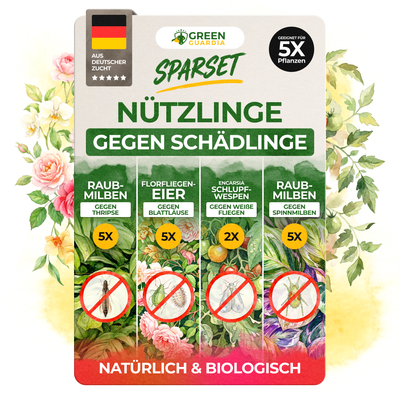
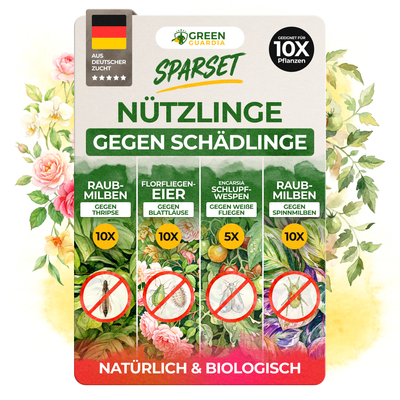
Suitable beneficial insects against aphids
Ladybugs & Ladybug larvae
- Eat large quantities of aphids
- Especially effective in the larval stage
- Ideal for gardens and balconies
Lacewing larvae
- Also known as “aphid lions”
- Very voracious and versatile
- Effective even with heavier infestations
Parasitic wasps (Aphidius species)
- Specifically parasitize aphids
- Ideal for greenhouses & houseplants
- Work sustainably at the source
Additional natural measures
- Rinse plants with water (for light infestations)
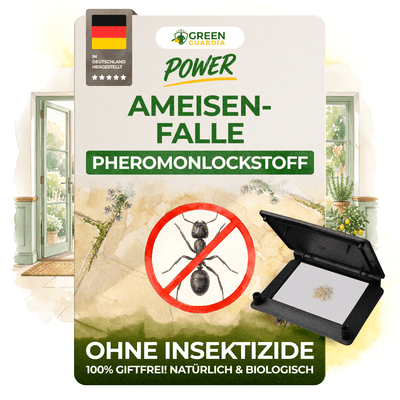
- Keep ants away (glue traps, barriers)
- Fertilize according to location (avoid excessive nitrogen)
FAQ about aphids
Are aphids dangerous to plants?
Yes, a heavy infestation significantly weakens plants and can transmit diseases.
How fast do aphids reproduce?
Very quickly – under favorable conditions, new generations are produced within a few days.
When are beneficial insects useful?
As early as possible in the infestation, before large colonies form.
Why do aphids keep coming back?
Often due to ant protection or an imbalance in the natural population of beneficial insects.