
























Colorado Potato Beetle: Identification, Damage & Natural Control
The Colorado potato beetle (Leptinotarsa decemlineata) can severely damage potato plants in a short time. The larvae, in particular, cause massive defoliation. Here, you will learn how to reliably identify Colorado potato beetles, their eggs, and larvae, what damage is typical, and which natural measures help.
What is the Colorado potato beetle?
The Colorado potato beetle is a noticeably yellow-and-black striped leaf beetle. It overwinters in the soil and reappears in the spring/early summer on potato plants. After laying eggs, larvae hatch that cause the most significant damage.
How to identify Colorado potato beetles, eggs & larvae
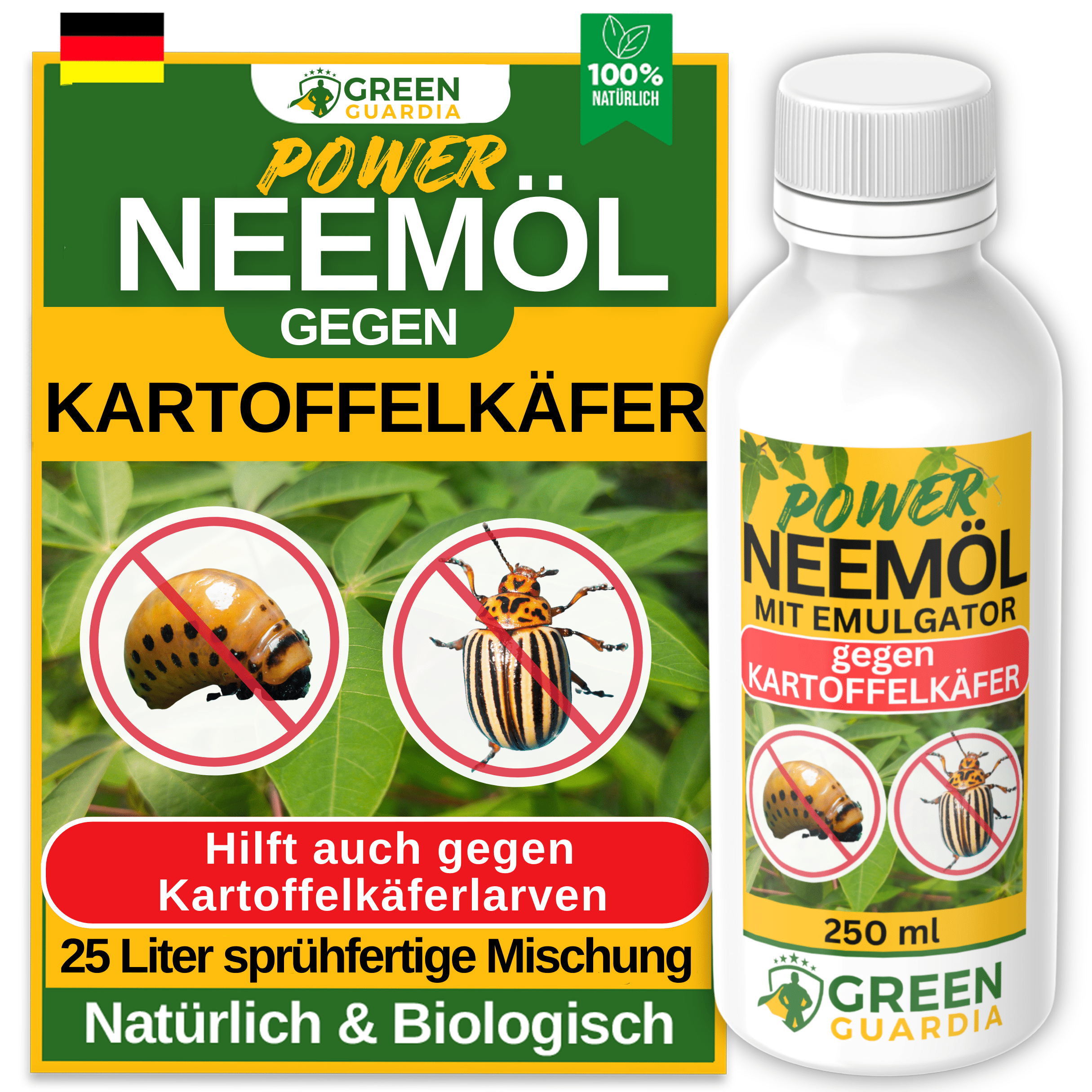
- Adult beetle: yellow with black longitudinal stripes, round-oval
- Eggs: bright yellow-orange, in groups on the underside of leaves
- Larvae: reddish to orange, plump, with dark spots on the sides
Typical signs of damage
- Irregular feeding spots on leaves
- Rapid defoliation (leaves are significantly reduced)
- Visible clusters of larvae on individual plants
- Weakened plants and reduced tuber formation
Which plants are affected?
- Potatoes (main host)
- Other nightshade plants (e.g., eggplant)
- Occasionally tomatoes (depending on region/infestation pressure)
Why does an infestation occur?
- Overwintering in the soil near the cultivation area
- Warm spring weather accelerates development
- Lack of monitoring: eggs/larvae go undetected
- Large potato fields in the surrounding area
Natural prevention
1. Regular monitoring
- Check the undersides of leaves weekly from sprouting
- Monitor more frequently on warm days
2. Crop rotation & location
- Do not grow potatoes in the same spot every year
- If possible, increase the distance from the previous year's planting sites
3. Strengthening plants
- Balanced nutrient supply
- Consistent water supply (avoid "stress" drought)
Gentle measures for infestation
- Remove egg clusters from the undersides of leaves
- Collect beetles and larvae by hand (morning/evening)
- Targeted removal of heavily infested leaves
Beneficial insects & natural adversaries
In a nature-friendly garden, various adversaries help to reduce the pressure. These include primarily birds, ground beetles, and other predatory insects. However, for Colorado potato beetles, mechanical control (collecting eggs/larvae) is the most practical method because the stages are easily visible.
FAQ about the Colorado potato beetle
When do Colorado potato beetles appear most frequently?
Usually from late spring to summer, depending on weather and region. After warm periods, eggs and larvae can develop particularly quickly.
Where can I find the eggs?
Almost always on the underside of the leaves – as yellow-orange egg packets in groups.
How quickly can a plant be stripped of its leaves?
Very quickly in the case of heavy larvae infestation – which is why early monitoring is critical.
What is the best first step when an infestation is found?
Remove eggs and collect larvae. Then continue regular monitoring so that no new egg clusters are overlooked.