


















Harmful Moths: Identifying Caterpillar Damage & Natural Control
Many moths are valuable pollinators and part of a healthy garden ecosystem. The term “harmful moths” is colloquially used for species whose caterpillars can damage plants, fruits, or stored goods when their populations surge (e.g., box tree moths, fruit moths, winter moths). Here you will find a practical overview: typical signs, common causes, and natural solutions – without a “one-size-fits-all” approach.
What are “harmful moths”?
This term is not biologically defined. It refers to species of moths whose larvae (caterpillars) can cause significant damage when their population reaches mass proportions. Adult moths are usually inconspicuous – damage is almost always caused by caterpillars feeding on leaves, shoots, buds, or fruits.
Typical Damage Patterns (depending on the species)
- Leaf damage: Holes, skeletonized leaves, defoliated shoots
- Webbing: Folded leaves, “nets” (e.g., ermine moths, box tree moths)
- Boring/Tunnels: Feeding inside shoots or fruits (e.g., fruit moths)
- Frass: Small black droppings on or under leaves
- Fruit infestation: Puncture marks, feeding trails, premature fruit drop
Which plants are frequently affected?
- Fruit trees (apples, plums, cherries – e.g., fruit moth larvae)
- Brassicas (cabbage white butterfly caterpillars)
- Boxwood (box tree moths)
- Ornamental shrubs and hedges (winter moths, ermine moths)
- Vegetable beds and herbs (varies by species)
Why do mass infestations occur?
- Mild winters (increased survival)
- Warm springs (rapid development)
- Lack of natural predators
- Monoculture / low biodiversity
- Lack of monitoring (eggs/young caterpillars are overlooked)
Natural Measures (Basics)
1. Early Detection & Mechanical Reduction
- Check the undersides of leaves for eggs
- Pick off young caterpillars by hand (morning/evening)
- Remove webs/folded leaves
2. Protective Netting / Cultural Control
- For cabbage & sensitive vegetables: Use nets to prevent egg-laying
- For fruit trees: Monitoring (e.g., pheromones) + orchard hygiene
3. Strengthening Garden Balance
- Encourage birds (nesting boxes, structurally rich hedges)
- Encourage ground beetles & other ground predators (moderate mulching, provide shelter)
- Provide flowering plants for parasitoids (e.g., dill, fennel, wildflowers)
Beneficial Insects: What is recommended and when?
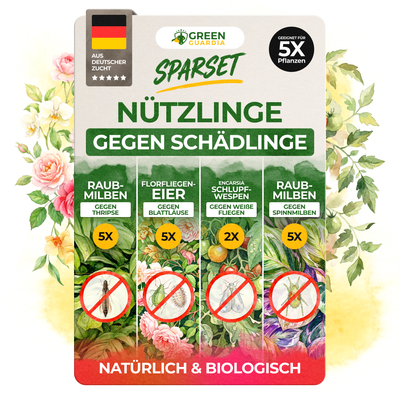
Recommendation 1: Parasitic Wasps (species-specific) – against eggs/early stages
Parasitic wasps (parasitoids) are often the most suitable natural opponents when it comes to stopping the next generation (eggs or early larval stages). The right species depends on the specific pest (e.g., fruit moths, box tree moths, leaf miners).
- Why it works: Targets the root cause (eggs/early stages) and breaks the cycle.
- Why it’s useful: Reaches hidden spots you might miss during manual removal.
Recommendation 2: Nematodes (Steinernema) – for soil-dwelling stages
If caterpillars or pupae are present in or on the soil (e.g., “cutworms” or overwintering stages), nematodes are excellent natural support.
- Why it works: Acts in the soil where manual picking is ineffective.
- Important: Soil moisture is crucial for success.
Stage in the soil? → Nematodes.
Focus on eggs/early stages? → Specific parasitic wasps (species-dependent).
FAQ on “Harmful Moths”
Do I have to control every caterpillar?
No. Many caterpillars are part of a healthy ecosystem. Taking action is primarily recommended when your harvest or young plants are threatened or when there is a mass infestation.
What is the fastest natural measure?
Hand-picking (or removing webs) is often the fastest method – especially for a small number of plants. The earlier you start, the easier it is to maintain control.
Why can't I see the caterpillars, but the damage is there?
Many caterpillars feed at night or hide during the day in webs, rolled leaves, or in the soil. Checking in the early morning helps.
Which beneficial insects are “the best”?
There is no one-size-fits-all solution. The species and environment are key: Parasitic wasps (species-specific) for eggs/early stages, nematodes for soil stages, and general promotion of beneficials in the garden (birds, ground beetles, parasitoids).