




















Fungus Gnats: Stop tiny black flies in your flowerpot
Fungus gnats are tiny, dark-colored flies that often appear on houseplants. The actual problem is not the flying insects, but the larvae in the substrate: They feed on fine roots and weaken plants – especially in soil that remains constantly damp. Here you can learn how to reliably identify fungus gnats and sustainably reduce them using natural measures.
What are fungus gnats?
Fungus gnats (Sciaridae) are small flies that prefer to lay their eggs in damp potting soil. Larvae hatch from the eggs, moving through the substrate to nibble on organic material and even fine roots. This makes plants more susceptible to stress and stunts their growth.
How to recognize an infestation
- small, black flies that fly up when you water or move the pot
- fungus gnats often sit on the soil or on the rim of the pot
- yellow sticky traps quickly catch multiple insects
- weak, failing plants despite care
- in case of heavy infestation: larvae in the substrate (glassy/whitish, dark head)
Why does an infestation occur?
- overwatering / waterlogging
- poorly draining, highly organic soil
- saucers with standing water, permanently moist root balls
- introduction via new plants or fresh soil
What to do in case of infestation? (natural & sensible)
1. Adjust watering habits
- Allow the soil to dry out between waterings
- Avoid waterlogging (empty saucers)
- Use pots with drainage (expanded clay) and a drainage hole
2. Make the surface unattractive
- Keep the top layer of soil dry
- Cover the topsoil with a thin layer of material (e.g., quartz sand) – this makes egg-laying difficult
3. Monitoring & reduce adults
- Place yellow sticky traps in the pots
- for many plants: use multiple traps per area
Beneficial insects against fungus gnats: Nematodes
Recommendation: Nematodes (Steinernema feltiae)
Nematodes are a proven, natural solution against fungus gnat larvae. They are applied with the irrigation water and work directly in the substrate, parasitizing the larvae and thus breaking the life cycle.
- Why suitable: The larvae live in the soil – which is exactly where nematodes work.
- Why sensible: They reach larvae that cannot be removed mechanically.
- Important: Keep the substrate evenly moist during application.
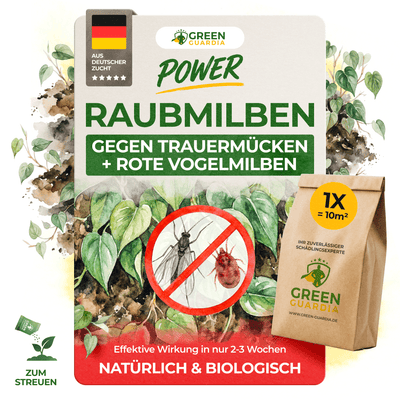
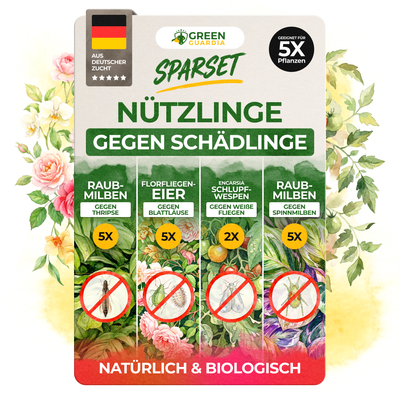
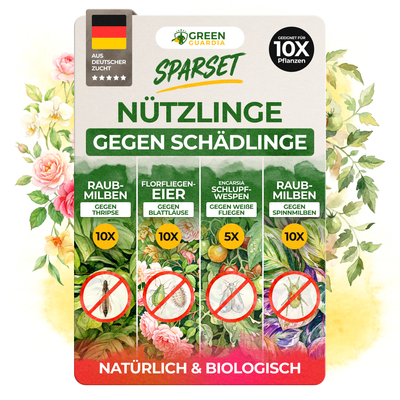
Optional addition: Predatory mites in the substrate
In some situations, soil-dwelling predatory mites can be supportive, as they also hunt larval stages in the substrate. This is especially interesting in cases of persistent infestation pressure.
FAQ about fungus gnats
Are yellow sticky traps enough on their own?
Yellow sticky traps help very well against adults but do not stop the larvae in the substrate. For sustainable results, you additionally need nematodes and adjusted watering.
Why do fungus gnats keep coming back?
Usually, the soil remains too damp for too long, or new soil/plants are introduced. A drier surface and soil measures are decisive.
When will I see an improvement?
The number of adults decreases quickly with yellow sticky traps. The infestation drops sustainably as soon as the larvae in the substrate are reduced (cycle interrupted).
What is the best prevention?
Do not overwater, ensure good drainage, check new plants briefly, and pay special attention to moisture when using fresh soil.